
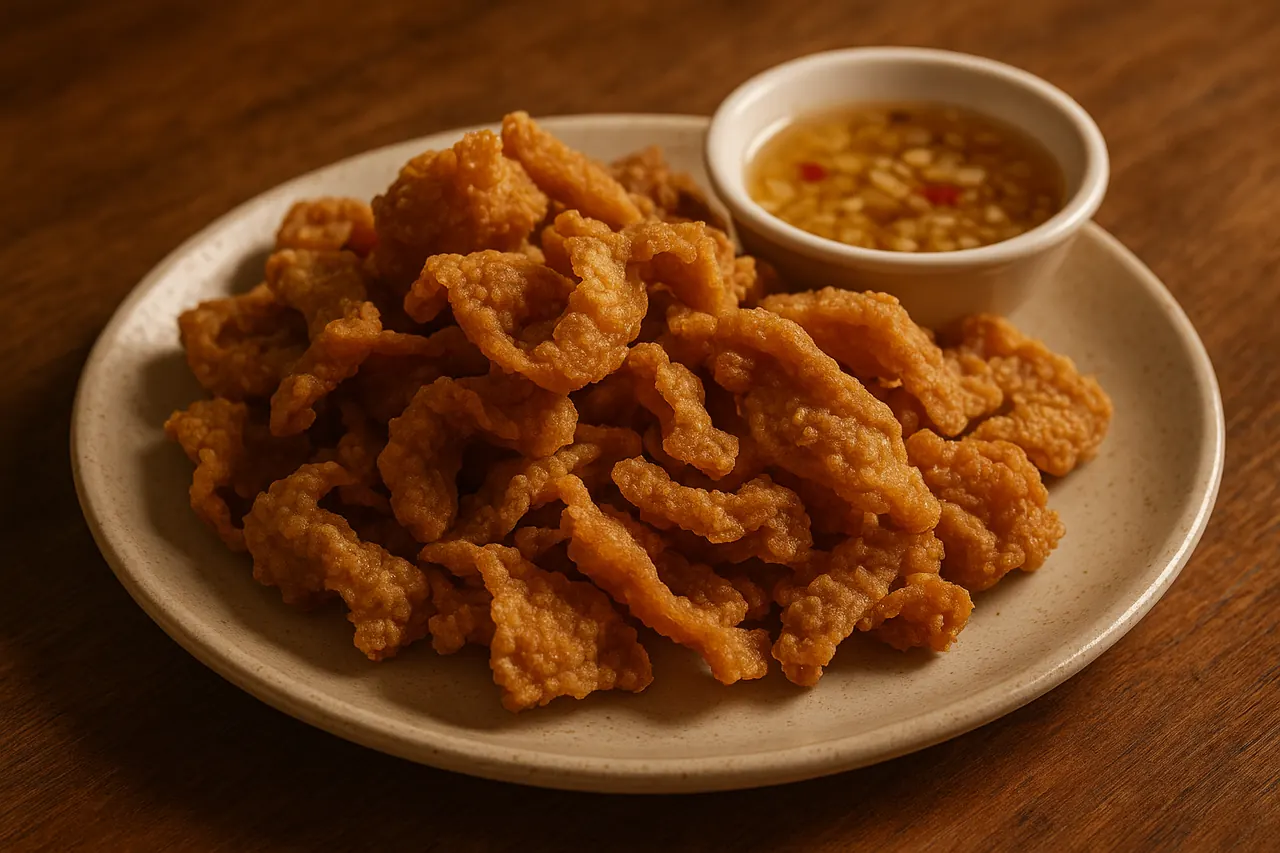
Chicken skin is a favorite Filipino snack because it brings together three things people actively crave: crisp texture, rich savory flavor, and easy shareable snacking. It also belongs to the wider Filipino chicharon tradition, where simple ingredients are turned into something crunchy and satisfying. Kawaling Pinoy’s chicken skin chicharon guide describes it as a common snack or appetizer and explains the familiar method behind its appeal: cook it, dry it, then deep-fry it until crisp.
If you have never tried it before, the short answer is this: expect something crispy, salty, rich, and especially enjoyable with a sharp dip such as spiced vinegar. If you already enjoy crunchy fried snacks, chicken skin is one of the clearest examples of why texture matters so much in Filipino comfort food.
Why people love it so much
First, the crunch is the point. Chicken skin is valued for becoming intensely crisp when prepared well. Kawaling Pinoy describes it as super crispy, crunchy, and tasty, which helps explain why it works so well as finger food and casual snacking.
Second, it is naturally rich. Chicken skin contains substantial fat and collagen-related material, which helps explain its fuller mouthfeel and concentrated savory character. A food-science paper available through PMC on chicken skin fat and gelatin characteristics supports that composition.
Third, it fits a familiar Filipino snack tradition. Chicken skin is not an isolated novelty. It sits inside the broader world of crispy snacks and chicharon-style foods. The same Kawaling Pinoy article notes that chicharon is widespread in Philippine cuisine and appears in many forms, including pork rind, intestines, tuna skin, mushroom, and chicken skin.
What Filipino chicken skin tastes like
Filipino chicken skin is best understood as salty, savory, rich, and deeply crisp. Depending on the preparation, it can also pick up aromatic notes from seasonings such as garlic, peppercorns, ginger, and vinegar. That profile is supported by Kawaling Pinoy’s ingredient list and cooking method, which uses vinegar, garlic, peppercorns, salt, and ginger before frying.
What makes it especially craveable is contrast. The skin itself is fatty and crunchy, then the dip adds sharpness, heat, or sweetness. That contrast keeps the snack from feeling one-note.
Dips and seasonings that make it more craveable
- Spicy vinegar: a classic choice because acidity cuts through richness. Kawaling Pinoy directly recommends it, and Panlasang Pinoy’s Filipino vinegar dipping sauce guide explains why vinegar works so well with fried Filipino food.
- Lechon sauce: a sweeter, thicker option also named in Kawaling Pinoy’s serving notes.
- Garlic chili vinegar styles: Panlasang Pinoy describes vinegar dips with chili, garlic, onion, pepper, and sometimes ginger or soy sauce, all of which brighten oily fried food.
How chicken skin is prepared
The clearest documented Filipino home-style method follows a simple sequence: cook, dry, then fry. Kawaling Pinoy’s chicken skin chicharon method explains that the skin is boiled to tenderize and season it, dried to remove moisture, then deep-fried until crunchy.
- Boil or simmer the skin with flavorings such as vinegar, garlic, peppercorns, ginger, and salt.
- Dry it thoroughly so it crisps instead of steaming in the oil.
- Deep-fry until puffed and crunchy.
- Serve immediately while the texture is at its best.
That sequence explains most of the snack’s character. Boiling builds flavor. Drying makes crispness possible. Frying creates the final crunch.
How it fits Filipino snacking culture
The strongest supported explanation comes through the broader chicharon tradition. Kawaling Pinoy notes that chicharon reflects Spanish influence in local culture and is now common in Philippine cuisine as a snack, appetizer, or ingredient in other dishes. Chicken skin fits naturally into that crunchy, savory food tradition.
It also reflects a style of cooking that values strong flavor and satisfying texture from straightforward ingredients. That helps explain why chicken skin feels like comfort food rather than a gimmick.
How chicken skin differs from chicharon and isaw
SnackMain ingredientTextureWhat makes it distinctChicken skinChicken skinCrisp, rich, crunchyKnown for fatty richness and a strong crunch, often paired with vinegar-based dipsPork chicharonPork rind or pork fat-heavy cutsCrunchy and airy to densePart of the same broad chicharon family, but based on pork rather than chicken; see Kawaling Pinoy’s pork chicharon pageIsawIntestinesMore chewy than crisp in many versionsVery different ingredient and bite, even when served as a snackKawaling Pinoy directly says Philippine chicharon comes in several varieties, including pork rind, intestines, tuna skin, mushroom, and chicken skin. The easiest way to think about the difference is this: chicken skin belongs to the same crunchy-snack family, but it stands out for its distinct fatty richness.
When people eat it
The clearest supported uses are as a snack or appetizer. That wording comes directly from Kawaling Pinoy’s article.
That role makes sense because chicken skin is easy to eat by hand, best when hot and crisp, and strong enough in flavor to feel satisfying in a small serving. Those traits make it a natural casual bite to share or a crunchy side on the table.
Best pairings for chicken skin
The most strongly supported pairings are the sauces. Kawaling Pinoy names spicy vinegar and lechon sauce. Panlasang Pinoy explains that vinegar dipping sauces work especially well with fried and grilled Filipino dishes because the acidity helps balance salt and oil.
From that flavor logic, these pairings make the most practical sense:
- Spicy vinegar: best if you want the classic sharp contrast.
- Lechon sauce: a better fit if you prefer sweet-savory balance.
- Plain rice: a simple way to soften the salt and richness.
- Cold drinks: a refreshing match for a rich fried snack.
- As part of a fuller meal: chicken skin works well beside savory mains when you want a crunchy side.
If you want a snack-first experience, start with chicken skin and spicy vinegar. If you want it to feel more like part of a meal, pair it with something plainer or more filling so the richness has balance.
On Adobo House’s site, the approved menu context includes Fried Chicken Skin and Chicken Skin with Iced Tea. You can browse the Adobo House menu for current options or read more in the restaurant’s guide to popular Filipino comfort foods.
What first time eaters should know
Texture comes first
Good chicken skin should be crisp. That is what the documented cook-dry-fry method is designed to produce. See the method here.
It is rich
Chicken skin is naturally fat-rich, which helps explain why it feels fuller and heavier than lean meat snacks. The food-science paper at PMC supports that composition.
Start simple if you are unsure
Many first-time eaters enjoy it most as a shared snack, starter, or side rather than the only thing on the table. A vinegar dip usually gives the clearest first impression because it balances the richness so well.
More than just a crispy treat
Chicken skin can absolutely be a treat, but it also reflects something broader in Filipino food culture: a love of texture, contrast, and flavor-packed cooking. The wider chicharon context described by Kawaling Pinoy shows that Filipino cuisine includes many variations built from different ingredients, all transformed through seasoning, drying, and frying into crunchy snacks.
So while chicken skin is indulgent, it is not random. It reflects a food tradition that values making simple ingredients satisfying and memorable.
Where to start if you want to try it
If you want to explore beyond chicken skin, Adobo House also has related reads on Filipino comfort food, silog meals, and halo-halo. That gives you an easy way to build a fuller order with a crunchy starter, a filling main, and a classic dessert.
Your next bite
If you want to try it for yourself, browse the Adobo House menu or message Adobo House on WhatsApp to ask whether you want chicken skin on its own or with iced tea.
Contact Us
Contact our team using the details below.