
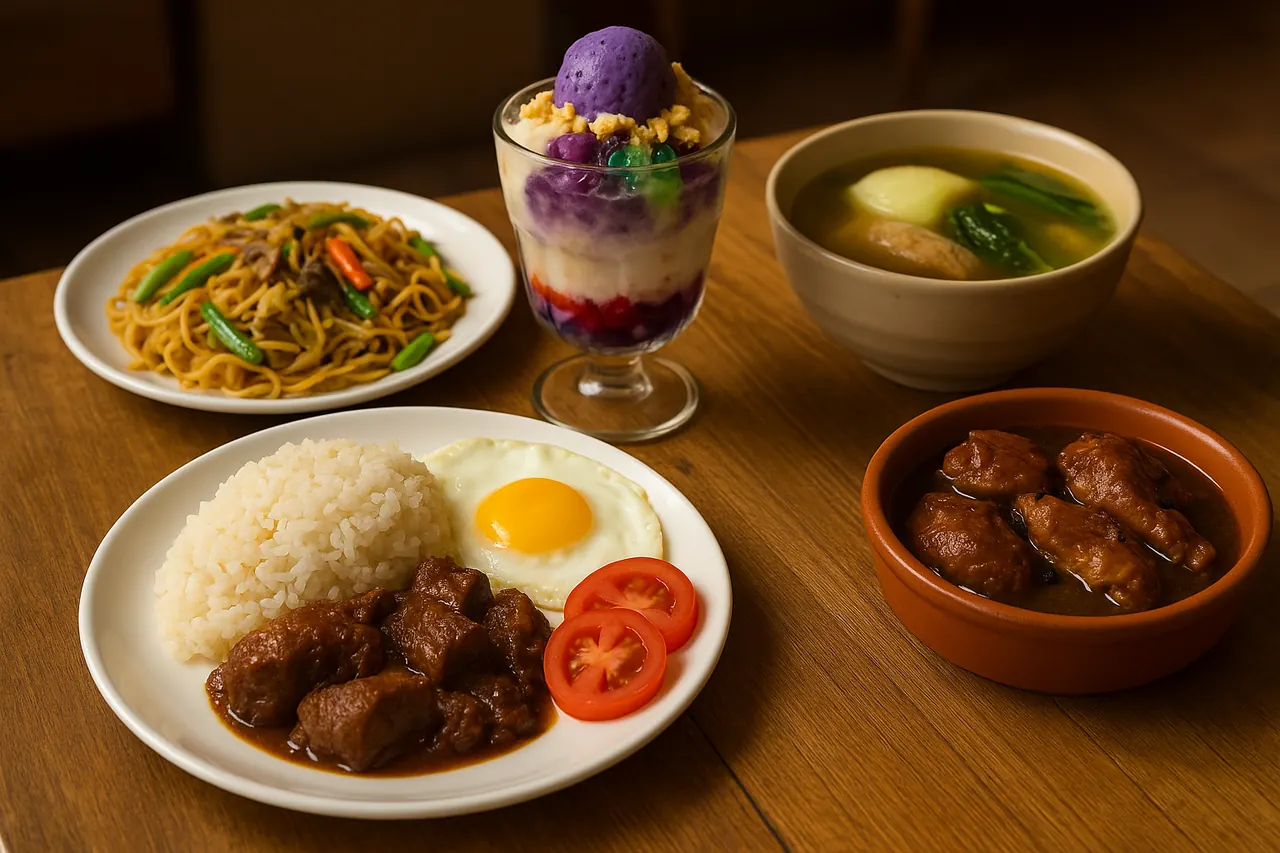
If you want a simple place to start, try adobo, pancit, silog meals, and halo-halo. Those are the dishes Adobo House highlights as familiar starting points for guests exploring Filipino food, and they cover four different comfort-food moods: savory braised dishes, noodle dishes, filling rice meals, and cold dessert. See Adobo House’s guide to Filipino comfort food.
If you are choosing your first dish, this quick path helps:
- Want something savory and easy to understand? Start with adobo or pancit.
- Want a filling rice meal? Try a silog meal.
- Want something rich and hearty? Try kare-kare.
- Want something soupy and bright? Choose sinigang.
- Want a cold sweet finish? Go for halo-halo.
What makes a dish Filipino comfort food
Filipino comfort food is not only about being filling. The Philippine Department of Agriculture’s Filipino Food Month page describes Filipino cuisine as part of national identity, shaped by family, hospitality, bayanihan, and shared memories. That helps explain why comfort dishes often feel satisfying in two ways at once: they deliver bold flavor and they carry a familiar, home-style feel.
Across many dishes, that comfort usually comes from a few patterns:
- Rice or noodles that make the meal feel complete
- Strong contrast such as savory and tangy, or sweet and icy
- Warmth and richness from braises, soups, porridges, and stews
- Shareable formats that suit family meals and gatherings
That is why adobo, pancit, kare-kare, sinigang, and halo-halo can all feel like comfort food even though they are very different kinds of dishes.
The most popular Filipino comfort foods to try first
DishBest forWhat it tastes likeWhen it fits bestAdoboFirst-time dinersSavory, tangy, garlickyLunch or dinnerPancitNoodle cravings, sharingSavory with a little sweetnessLunch, dinner, gatheringsSilog mealsA filling rice mealGarlic rice, egg, and a savory mainAny time you want a complete plateSinigangSoup loversSour, brothy, savoryLunch or dinnerKare-kareHearty comfortNutty, rich, mild until mixed with bagoongLunch, dinner, shared mealsHalo-haloDessert or cooling finishSweet, milky, icy, layeredDessert or meriendaFor Adobo House specifically, the site’s own comfort food article points readers first to adobo, pancit, silog meals, and halo-halo. If you want to understand the rice-meal format more clearly, their silog guide explains it in more detail.
If you are new to Filipino cuisine start here
The easiest first choices are usually the dishes with familiar formats and clear flavors.
Adobo
Adobo is a strong first order because it is easy to pair with rice and has a very clear flavor profile. Panlasang Pinoy’s chicken adobo recipe describes the core profile as soy sauce, vinegar, garlic, peppercorns, and bay leaves. Expect a savory, tangy, garlicky taste rather than a spicy one.
Pancit
If you already enjoy stir-fried noodles, pancit is one of the easiest entry points. Panlasang Pinoy’s pancit canton recipe describes it as a Filipino stir-fried noodle dish with flour stick noodles, proteins, vegetables, soy sauce, and oyster sauce. The result is savory, slightly sweet, and satisfying enough to work as a full meal.
Silog
Silog works well when you want a complete plate without overthinking the order. Adobo House describes silog as a meal built from garlic rice, egg, and a savory main in its What Is Silog guide. That structure makes it approachable even if you are trying Filipino food for the first time.
Sinigang
If you enjoy soup, sinigang is one of the most distinctive Filipino comfort dishes to try. Panlasang Pinoy’s sinigang recipe describes it as a Filipino sour soup with pork, tamarind broth, and vegetables. The main thing to expect is a bright sour broth rather than a creamy or spicy soup.
Kare-kare
Kare-kare is a good next step when you want something richer. Panlasang Pinoy’s kare-kare recipe describes it as a Filipino stew of oxtail and vegetables in a thick peanut sauce, served with rice and bagoong alamang on the side. The sauce is nutty and rich, while the bagoong adds the sharper salty note.
Halo halo
For dessert, halo-halo is one of the most beginner-friendly Filipino sweets because it is cold, layered, and easy to enjoy in hot weather. Panlasang Pinoy’s halo-halo page describes it as a mix of sweet ingredients, shaved ice, and evaporated milk, often topped with leche flan and ube halaya. Adobo House also has a related article, Halo-Halo The Filipino Dessert Made for UAE Weather.
Which Filipino comfort foods are savory sweet or best shared
Savory comfort foods
- Adobo for a savory-tangy braised flavor
- Pancit for savory noodle comfort
- Silog meals for a savory rice-and-egg plate
- Sinigang for sour-savory soup
- Kare-kare for rich peanut stew
Sweet comfort foods
- Halo-halo for a cold layered dessert
- Bilo Bilo, which Adobo House lists on its website
- Special Turon, which Adobo House also lists on its website
Best shared
Pancit and kare-kare stand out here. The pancit canton source describes it as a dish often made for birthdays and a crowd, while the kare-kare source ties it to birthdays, fiestas, and holiday tables.
Must try dishes beyond the best known names
Once you move past the most familiar starting points, Filipino comfort food gets broader and more interesting.
Noodle and soup choices
- Pancit Malabon if you want another noodle direction; Adobo House lists Pancit Malabon with Chicken BBQ on its website
- Lomi if you want thicker noodle comfort; Adobo House lists Lomi Overload
Street food and snack style choices
- Isaw if you want a more street-food-style option; Adobo House lists Isaw with Iced Tea
- Fried Chicken Skin if you want something crisp and snack-like; Adobo House lists it on the website
Desserts
- Halo-halo for an icy layered dessert
- Special Turon for something crisp and sweet
- Bilo Bilo for a softer dessert direction
If desserts are your main interest, Adobo House already has a related article, A Guide to Desserts at a Filipino Restaurant.
How to choose by craving
If you are ordering by mood, this is the fastest way to narrow your options.
- Want something hearty and rich? Try kare-kare or adobo.
- Want something soupy? Try sinigang or lomi.
- Want noodle comfort? Try pancit.
- Want a full rice meal? Try a silog plate such as Tapsilog, which Adobo House lists on its website.
- Want something crisp or snack-like? Try Special Turon or Fried Chicken Skin.
- Want something cold and sweet? Finish with halo-halo.
On Adobo House’s website, dishes such as Tapsilog, Lomi Overload, Hot Halo-Halo, Pancit Malabon with Chicken BBQ, and Special Turon give you several of those comfort-food directions from one menu.
What to pair with Filipino comfort foods
A Filipino comfort meal is usually easiest to enjoy when you think in terms of a main dish plus the right finish.
- Adobo works naturally with rice because the sauce is a big part of the dish. See Easy Chicken Adobo Recipe.
- Kare-kare is served with rice and bagoong alamang on the side, according to Panlasang Pinoy’s kare-kare recipe.
- Sinigang is eaten with rice, and the sinigang source also mentions fish sauce with chili on the side.
- Heavier savory dishes pair well with a cold dessert such as halo-halo.
If you want a balanced approach, the official Pinggang Pinoy guidance from DOST-FNRI recommends balancing meals with carbohydrate-rich foods, protein, and fruits or vegetables. Its adult food plate guide also recommends water as the main drink and limiting sugar-sweetened beverages.
In practice, that often means a simple pattern: a savory main, rice, a vegetable component where available, water, and dessert when you want a treat rather than the center of the meal.
What to check before ordering an unfamiliar dish
This matters most when you are trying Filipino food for the first time.
- Check the main ingredients. For example, pancit canton can include pork, shrimp, Chinese sausage, vegetables, soy sauce, and oyster sauce.
- Check the cut or protein used. Kare-kare may use oxtail, pork hock, beef tripe, or other cuts, which changes richness and texture.
- Check whether the dish is bone-in or more specialized. Some stews and soups can use bone-in cuts, and some regional dishes may use offal.
- Check dessert mix-ins if you prefer simple sweets. Halo-halo can vary a lot in toppings and texture.
- Check whether you want an individual meal or something easier to share. Pancit and kare-kare suit sharing better than a silog meal.
A simple first Filipino comfort food plan
If you want to explore Filipino comfort food more confidently, this order makes sense:
- Start with adobo for a clear savory-tangy profile.
- Try pancit next to explore the noodle side of Filipino comfort food.
- Move to silog when you want a complete rice-based meal.
- Try sinigang if you enjoy soup and want something brighter.
- Choose kare-kare when you want a richer, heavier dish.
- Finish with halo-halo, turon, or bilo bilo to explore Filipino desserts.
This path works because it moves from the most immediately familiar dishes to the more distinctive ones without making the first order feel complicated.
What to try next at Adobo House
If this guide helped you narrow your choices, the next step is simple: check Adobo House’s menu and contact details or send an order message on WhatsApp. A useful message would include whether you want noodles, a rice meal, dessert, or a snack and how many people you are ordering for. That makes it easier to choose between items such as Tapsilog, Lomi Overload, Pancit Malabon with Chicken BBQ, Special Turon, or Hot Halo-Halo.
Contact Us
Contact our team using the details below.