
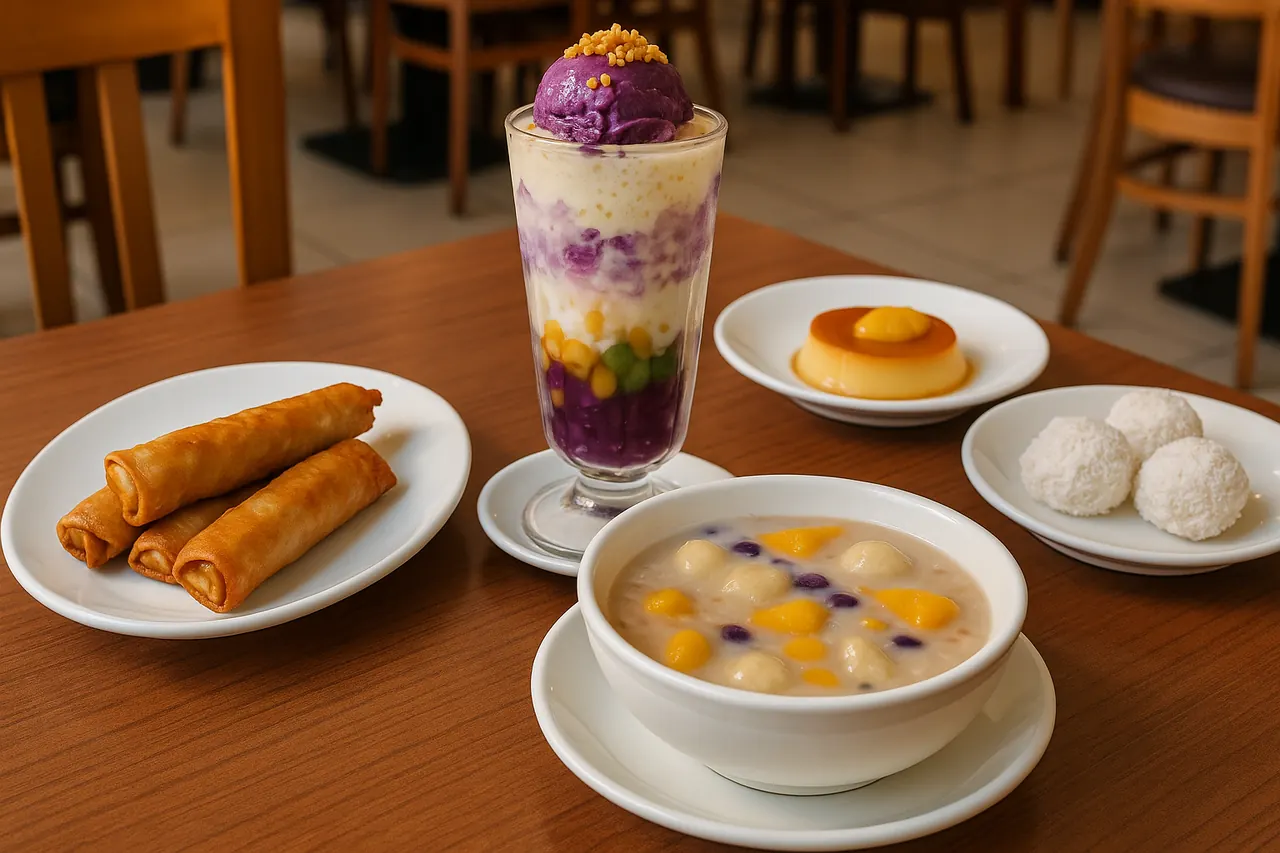
If you love sweets and want a smart introduction to Filipino desserts, start with three very different styles: halo-halo for something cold and layered, turon for something crisp and caramelized, and ginataang desserts such as bilo-bilo or binignit-style desserts for something creamy, chewy, and comforting. Together, they show what makes Filipino desserts memorable: they focus on texture, contrast, and mix-ins as much as sweetness.
The short version is simple: choose halo-halo when you want an icy finish, turon when you want a warm fried sweet, and bilo-bilo or a similar coconut-milk dessert when you want a softer, richer bowl dessert.
The must try Filipino desserts for sweet lovers
A strong starting list includes:
- Halo-halo — a cold shaved-ice dessert with sweetened beans, fruits, jellies, milk, leche flan, purple yam jam, and often ice cream, as described in Kawaling Pinoy's halo-halo guide.
- Turon — a fried banana spring roll with a caramelized crispy wrapper and soft sweet filling, explained in Kawaling Pinoy's banana turon recipe.
- Ginataang bilo-bilo — a coconut-based dessert with glutinous rice balls, sago, sugar, and jackfruit, outlined in Panlasang Pinoy's ginataang bilo-bilo with langka recipe.
- Ginataang halo-halo or binignit — a coconut-milk dessert made with tubers, saba banana, tapioca pearls, and sometimes glutinous rice balls, based on Panlasang Pinoy's ginataang halo-halo recipe and Panlasang Pinoy's binignit recipe.
If a restaurant offers desserts across these styles, you can try something icy, something fried, and something coconut-rich without repeating the same kind of sweet.
What each dessert tastes like
Halo halo
Halo-halo is cold, milky, and highly mixed in texture. The shaved ice and milk make it refreshing, while the beans, fruits, jellies, and toppings create creamy, soft, chewy, and sometimes crunchy bites in the same glass or bowl. Kawaling Pinoy describes it as a Filipino-style shaved ice topped with milk, leche flan, purple yam jam, and ice cream.
Turon
Turon tastes sweet and caramelized, with contrast doing most of the work: a crisp fried wrapper outside and soft banana inside. Some versions also include langka, which adds another layer of sweetness and aroma. Kawaling Pinoy's turon page describes a caramelized crispy wrapper with soft, sweet banana and langka filling.
Ginataang bilo bilo
This is a richer spoon dessert with a coconut base. Expect creaminess from coconut cream, chew from glutinous rice balls, and extra texture from sago pearls. Panlasang Pinoy lists coconut cream, sugar, sago pearls, jackfruit, and bilo-bilo as the key components.
Ginataang halo halo and binignit
These desserts lean further toward soft and comforting. Panlasang Pinoy's ginataang halo-halo guide describes a dessert built with sweet potato, purple yam, taro, plantains, jackfruit, tapioca pearls, and glutinous rice balls in coconut milk, and notes its soft and chewy texture. Its binignit recipe explains that binignit is similar, but differs by using muscovado sugar and landang in the traditional version described there.
Which dessert matches your craving
CravingBest fitWhyIcy and refreshingHalo-haloIt is built around shaved ice and milk with sweet mix-ins for contrast. See Kawaling Pinoy's halo-halo explanation.Warm and comfortingGinataang halo-halo, binignit, or ginataang bilo-biloThese coconut-milk desserts are spoonable, soft, and filling. See ginataang halo-halo, ginataang bilo-bilo, and binignit.Chewy and creamyGinataang bilo-biloThe glutinous rice balls and sago give it its signature chew.Crispy and sweetTuronThe fried wrapper brings crunch, while the banana filling stays soft and sweet. See banana turon.Mixed textures in one orderHalo-haloIt combines creamy, soft, chewy, and crunchy elements in one dessert.How halo halo turon and bilo bilo differ
The easiest way to compare them is by format, temperature, and texture.
- Halo-halo is a cold shaved-ice dessert with many toppings and mix-ins.
- Turon is a fried handheld dessert with a much simpler structure.
- Ginataang bilo-bilo is a coconut-milk bowl dessert built around chewy rice balls and sago.
- Binignit is similar to ginataang halo-halo, but Panlasang Pinoy's binignit page notes differences including muscovado sugar and landang, while its separate ginataang halo-halo recipe includes glutinous rice balls.
In practical terms, halo-halo is your cold mixed dessert, turon is your crisp fried sweet, and bilo-bilo is your creamy chewy comfort dessert.
Best starting choices for first time diners
If you are new to Filipino desserts, the easiest starting choices are the most familiar in format.
- Start with halo-halo if you already enjoy shaved ice, layered desserts, or lots of texture in one order.
- Start with turon if you want something straightforward, warm, crisp, and easy to understand from the first bite.
- Try bilo-bilo or a similar ginataang dessert next if you want a more texture-forward coconut-milk dessert with chewy and soft elements.
That order is a practical recommendation based on the documented ingredients and textures in the sources above.
When to order dessert on its own or after a meal
A useful way to decide is by how substantial the dessert feels.
- Choose halo-halo on its own when dessert is the main event. Because it is layered with shaved ice, milk, fruits, beans, jellies, and toppings, it can feel like a full dessert experience by itself, as shown in Kawaling Pinoy's halo-halo guide.
- Choose turon after a meal when you want a neater sweet finish. Its handheld format makes it feel lighter and simpler.
- Choose ginataang desserts when you want something filling and spooned. Panlasang Pinoy describes ginataang halo-halo as both a dessert dish and a meryenda item, which helps explain why it can work as more than a light afterthought.
Good pairings with savory Filipino dishes
A helpful rule is to pair a rich or savory meal with a dessert that changes the meal's temperature or texture.
For halo-halo, Adobo House's own article recommends enjoying it after grilled chicken, pancit, or a silog meal for a classic Filipino finish. That pairing makes sense because the dessert is cold, sweet, and layered, which contrasts well with savory mains.
If you want to explore more of the meal beyond dessert, you can also read Adobo House's guides to Filipino comfort food and silog.
What to check on the menu before you order
Filipino desserts can sound similar if you only read the names, so a few quick checks help.
- Serving style: is it shaved ice, a fried roll, or a coconut-milk bowl?
- Temperature: halo-halo is cold, while ginataang halo-halo may be served hot or cold.
- Toppings and mix-ins: halo-halo can vary a lot. Check whether it includes leche flan, ube, ice cream, beans, jellies, jackfruit, nata de coco, macapuno, or pinipig, as described by Kawaling Pinoy.
- Texture: if you dislike chewy textures, be aware that bilo-bilo and similar desserts may include glutinous rice balls and sago.
- Sweetness style: turon leans caramelized, while ginataang desserts often read as creamy-sweet.
How to build a smart dessert order
The goal is not to order more sugar. It is to order different styles.
For one person
Pick one main style. The simplest choice is halo-halo if you want a fuller dessert, or turon if you want something lighter and easier to finish.
For two people
Choose one cold dessert and one warm or crisp dessert. A good contrast is halo-halo plus turon.
For a group
Order across categories instead of doubling up on similar sweets:
- one icy dessert: halo-halo
- one crunchy dessert: turon
- one creamy chewy dessert: bilo-bilo or ginataang halo-halo
This kind of spread gives everyone a clearer sense of how varied Filipino desserts can be.
An easy first order for different diners
Illustrative plan:
- If you like cold desserts: start with halo-halo.
- If you like fried pastries or fruit desserts: start with turon.
- If you enjoy coconut desserts, tapioca, or chewy sweets: try bilo-bilo or ginataang halo-halo.
- If you want the most balanced tasting order for two: choose halo-halo and turon.
- If you want to turn dessert into more of a meal: follow with savory dishes such as grilled chicken, pancit, or a silog meal, as suggested in Adobo House's halo-halo article.
What to try next for a fuller Filipino restaurant experience
Once you have tried one dessert style, the best next move is to choose a completely different one.
If you start with halo-halo, try turon next for a crisp contrast. If you start with turon, move to a coconut-milk dessert so you can experience the chewy, creamy side of Filipino sweets. If you enjoy dessert after savory food, Adobo House's own blog points readers toward halo-halo after grilled chicken, pancit, or silog, and its related guides can help you continue with comfort food ideas and silog basics.
Choose your dessert style and check the current options
If you are deciding what to order from Adobo House, a useful next step is to use the contact details on the restaurant's contact page or message the restaurant on WhatsApp to ask which dessert styles are currently available. Mention whether you want something cold and refreshing, crispy and sweet, or creamy and comforting, and whether you are ordering for one person or sharing.
Contact Us
Contact our team using the details below.