
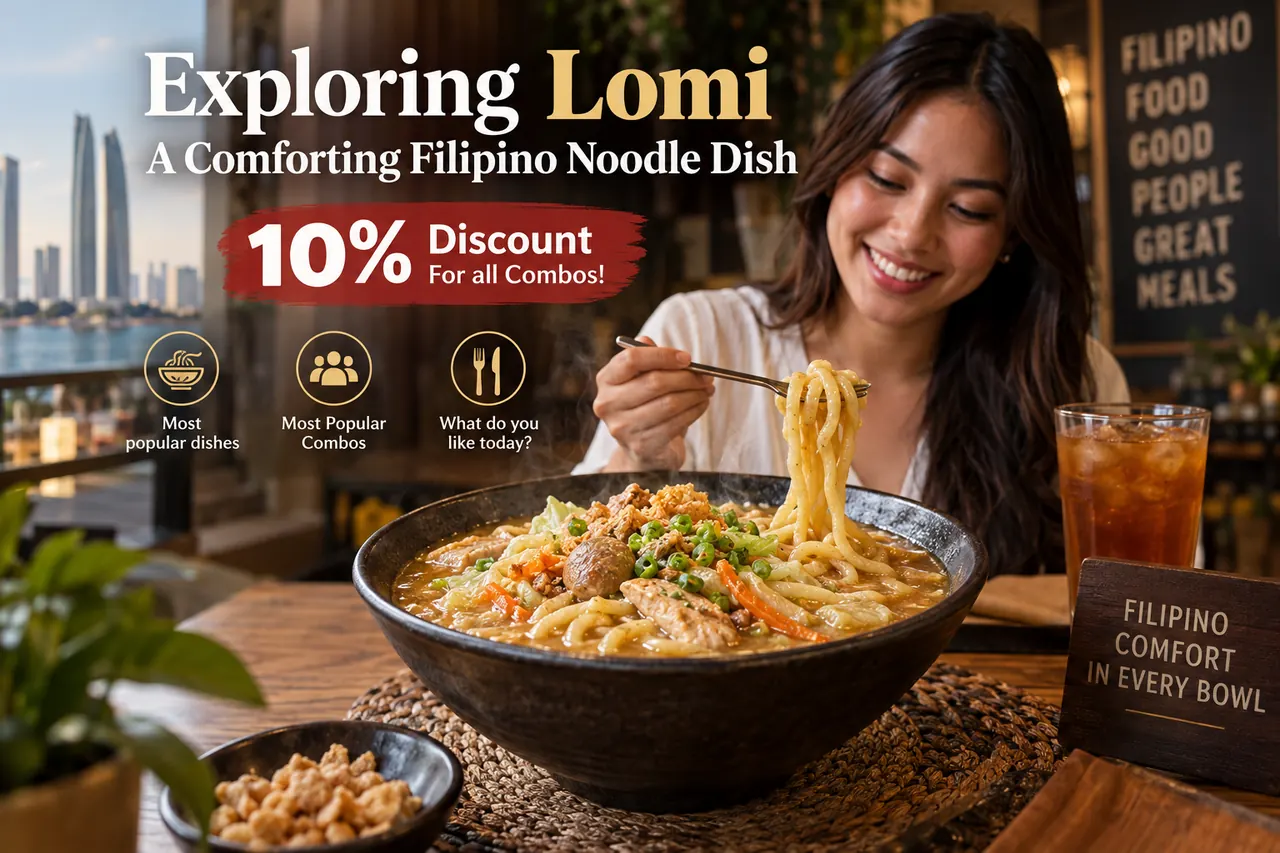
If you are a Filipino reader in Abu Dhabi wondering whether lomi is the kind of meal you actually want, the short answer is this: lomi is a thick Filipino noodle soup made with fresh egg noodles in a rich broth thickened with egg and often starch. It is known for chewy noodles, a fuller soup texture, and a filling, comfort-food feel. Panlasang Pinoy describes lomi as a noodle soup made with thick egg noodles and links its best-known variation to Batangas.
For most readers, the first decision is simple. If you want a bowl focused on broth and noodles, start with a more classic lomi style. If you want a richer, more substantial meal with more toppings, a loaded version makes more sense. At Adobo House, the clearly listed menu option is Lomi Overload with Iced Tea, described as a combo with thick savory lomi noodles, tender chicken, fresh vegetables, rich broth, and iced tea for AED 27.
What is lomi
Lomi, sometimes called pancit lomi, is a Filipino noodle soup built around thick fresh egg noodles. What makes it distinct is not only the noodle size but also the broth texture. Instead of a light, clear soup, lomi is intentionally thicker and heartier. Panlasang Pinoy describes chicken lomi as a thick Filipino noodle soup, and Kawaling Pinoy describes pancit lomi as a hearty soup made with fresh egg noodles.
That combination is why lomi often feels like a full meal rather than a light side dish. The broth carries weight, and the noodles add chew, so even one bowl can feel substantial.
Where lomi comes from
The available source material traces lomi to Chinese noodle soup roots and explains that it later developed into regional Filipino versions. Panlasang Pinoy notes that lomi originated from the Chinese and later developed regional variations. Among those, Batangas lomi is the version most often highlighted.
For readers, that matters because it explains why lomi feels both familiar and specific: it belongs to a broader noodle-soup tradition, but the thick Batangas-style bowl became one of the most recognizable Filipino comfort dishes.
Why Batangas lomi is the version many people picture
Batangas lomi stands out because it is described as very thick, meat-heavy, and often light on vegetables. Panlasang Pinoy describes Batangas lomi as very thick and filled with ingredients such as pork or chicken, kikiam, ham, meatballs, and crushed chicharon. That explains why many diners picture lomi as a rich, savory bowl rather than a simple noodle soup.
If you already associate lomi with a bowl that feels warming, heavy, and satisfying after a long day, that Batangas influence is a big reason why.
What makes lomi different from pancit mami and batchoy
DishMain differenceWhat to expectLomiThick noodles and thickened brothHearty, chewy, filling bowlMamiClearer brothLighter soup with less bodyBatchoyAssociated with Iloilo and pork innards with chicharonA different pork-focused noodle soup stylePancitBroader Filipino noodle category rather than one single soup styleCan refer to several noodle dishes, many not soup-basedThe clearest supported contrast is between lomi and mami. Panlasang Pinoy explains that mami uses fresh egg noodles in a clear broth, while lomi uses thick miki noodles in a broth tightened with cornstarch and egg. That makes lomi feel heavier and silkier.
Batchoy differs in another way. The same source describes batchoy as the Iloilo bowl with pork innards and chicharon, so its identity is tied more to those toppings and that regional style than to the egg-thickened texture that defines lomi.
For pancit, the comparison is broader. Lomi is often called pancit lomi, which places it within the wider Filipino noodle family, but what makes it distinct is that it is specifically a thick noodle soup.
What usually goes into a traditional bowl of lomi
A traditional bowl usually starts with thick fresh egg noodles, commonly called miki or lomi noodles, plus broth, egg, and a thickener such as cornstarch or cassava flour. From there, the toppings can vary by style. Panlasang Pinoy lists miki noodles, broth, egg, pork, kikiam, ham, pig's liver, meatballs, chicharon, and boiled egg among common ingredients.
Other recipe references show a lighter combination. Kawaling Pinoy uses chicken, liver, carrots, napa cabbage, eggs, and cornstarch-thickened stock. So while the toppings change, the core stays the same: thick noodles plus a thickened savory broth.
Why the broth is thick and the noodles are chewy
The thick broth is part of what defines lomi. Panlasang Pinoy explains that the broth gets body from beaten egg and then more thickness from cornstarch. That gives the soup a fuller texture than clear-broth noodle dishes.
The noodles matter just as much. Kawaling Pinoy notes that lomi noodles are thick egg noodles known for their chewy texture. Together, that thick broth and chew are what make lomi feel warming and substantial.
How lomi is typically prepared and served
The usual preparation starts with sautéed aromatics such as garlic and onion, followed by meat, seasonings, broth, noodles, thickener, and beaten egg. Panlasang Pinoy's lomi recipe describes sautéing garlic and onions, simmering the meat in broth, adding noodles, thickening the soup, then finishing with beaten egg before topping with chicharon and boiled egg.
It is normally served hot, often with toppings added at the end so the bowl keeps some contrast in texture.
What lomi tastes like
Lomi is best understood as savory, rich, and hearty. The broth is thick rather than delicate, and the noodles add chew and weight. In heavier versions, extra meat and crunchy toppings make the bowl richer still. Panlasang Pinoy describes Batangas-style lomi as very thick, and Kawaling Pinoy describes it as hearty and tasty.
Many diners like to brighten the bowl before eating. Kawaling Pinoy suggests calamansi or lemon juice and patis to brighten the flavors. That salty-citrusy finish helps balance a thick, rich soup.
When Filipinos usually eat lomi and why it feels like comfort food
Lomi works well as either a substantial snack or a full meal. Kawaling Pinoy says pancit lomi is filling as a midday snack or dinner meal. More broadly, Panlasang Pinoy notes that Filipino noodle soups often appear at merienda, lunch, or late in the afternoon.
That helps explain why lomi is seen as comfort food. It is hot, filling, and textured in a way that feels satisfying. For a Filipino reader in Abu Dhabi choosing what to eat after work or on a day when you want something warming rather than a lighter noodle dish, lomi is a practical pick because the soup itself already feels meal-sized.
Common variations you may come across
The most useful way to think about lomi variations is by how heavy the bowl is.
- Batangas-style lomi: thicker, meatier, often topped with crushed chicharon and multiple savory add-ons. See Batangas lomi description.
- Chicken lomi: keeps the thick broth and noodles but may use sliced chicken and vegetables for a lighter bowl. See chicken lomi description.
- Loaded restaurant-style lomi: adds more toppings and protein for a denser bowl. Panlasang Pinoy contrasts a lighter chicken lomi with a heavier version using pork, ham, liver, meatballs, and crushed chicharon.
That classic-versus-loaded difference is one of the most useful comparisons for someone ordering, because the core dish stays recognizable while the eating experience changes a lot.
How to choose between classic lomi and a loaded bowl
If you are deciding between a simpler lomi and a loaded version such as Lomi Overload, use these practical criteria:
Choose thisWhen it fits youAvoid it whenClassic lomiYou want the broth and noodles to be the focus, with a more traditional-feeling bowlYou want lots of toppings or a very heavy mealLoaded lomiYou are hungry, want more texture, or prefer a fuller meal with more going on in the bowlYou prefer a simpler soup experienceThe evidence supports this lighter-versus-heavier choice. Panlasang Pinoy explicitly contrasts a lighter chicken lomi with a heavier version using pork, ham, liver, meatballs, and crushed chicharon.
At Adobo House, the named option readers can compare against that idea is Lomi Overload with Iced Tea. The menu describes it as a combo with thick savory lomi noodles, tender chicken, fresh vegetables, rich broth, and iced tea for AED 27. If you want a fuller meal rather than just a bowl on its own, that is the clearly listed route.
A quick ordering example
Illustrative example: say you are a Filipino reader in Abu Dhabi choosing dinner after a long day and deciding whether you want nostalgia, comfort, or just something filling. If you want the classic character of lomi to stand out, start with a simpler bowl style where the thick broth and noodles do most of the work. If you skipped a meal or want a more complete solo dinner, a loaded option makes more sense because it gives you the same thick noodle-soup base with a fuller overall combination. If you also like a cold drink beside a rich hot dish, the Lomi Overload with Iced Tea combo is the clearly listed current menu option.
What can you expect if you order lomi at Adobo House
Based on the current product page, the clearest supported expectation is the Lomi Overload with Iced Tea combo: thick savory lomi noodles, tender chicken, fresh vegetables, rich broth, plus iced tea, priced at AED 27. If you already know you enjoy comforting noodle soups, that gives you a direct way to try a restaurant-style loaded version rather than guessing from the name alone.
If you want to compare it with other familiar Filipino comfort dishes before ordering, you can also read Best Filipino Comfort Food to Try in Abu Dhabi or What Is Silog A Filipino Breakfast Favorite.
Your next step
If this guide helped you decide that lomi is the kind of hearty meal you want, browse the Adobo House menu and compare whether you want a lomi combo or another Filipino comfort-food option. If you are ready to order or check availability, go to the Adobo House contact page or use WhatsApp, and mention the dish you want, whether you are choosing for dine-in or delivery, and whether you want a lighter bowl or a fuller combo.
Contact Us
Contact our team using the details below.